Player Development
What Training Methods Improve Soccer Skills Fastest?
Two kids train the same hours each week; one just gets better faster. It usually comes down to how they train, not how much. The six methods that consistently deliver.
In this article
In this article
Ever notice how two kids can train the exact same number of hours each week, but one just... gets better faster? It is a little frustrating to watch, honestly, especially if you are the parent of the kid who feels stuck.
It is easy to assume it is talent. But talent does not really hold up as an explanation once you watch enough players develop over time. Some naturally gifted kids plateau. Some average kids blow past everyone else.
It usually comes down to how they are training, not just how much. The kids who progress the quickest are being trained in a way that challenges them, keeps them interested, and puts them in game-like situations where they have to use their skills.
Why do some players improve faster than others?
Running the same drill 200 times without any real understanding of why you are doing it will not get you very far. Run that same drill with a clear goal and someone giving you feedback along the way, and suddenly those reps start to mean something.
The environments that produce real improvement tend to share a few things: quality over quantity, deliberate focused practice, individual feedback, consistency, positive coaching, a growth mindset, and a supportive atmosphere.
Coach Zane: "The players who improve the fastest aren't always the most naturally gifted. They're the ones who show up consistently, stay coachable, and focus on getting a little better every session. When training has a purpose, progress follows."
1. Purposeful repetition builds strong fundamentals
Every good player has strong fundamentals: first touch, passing, dribbling, receiving, shooting. These skills require reps. But not all reps are created equal.
Purposeful practice means concentrating on doing the technique right, not just grinding through another set. Every rep should have a reason behind it. The real game-changer is feedback: a coach who catches an off body position, bad timing, or awkward foot placement can fix it in the moment, before it becomes a habit that is much harder to unlearn later.
2. Small-sided games speed everything up
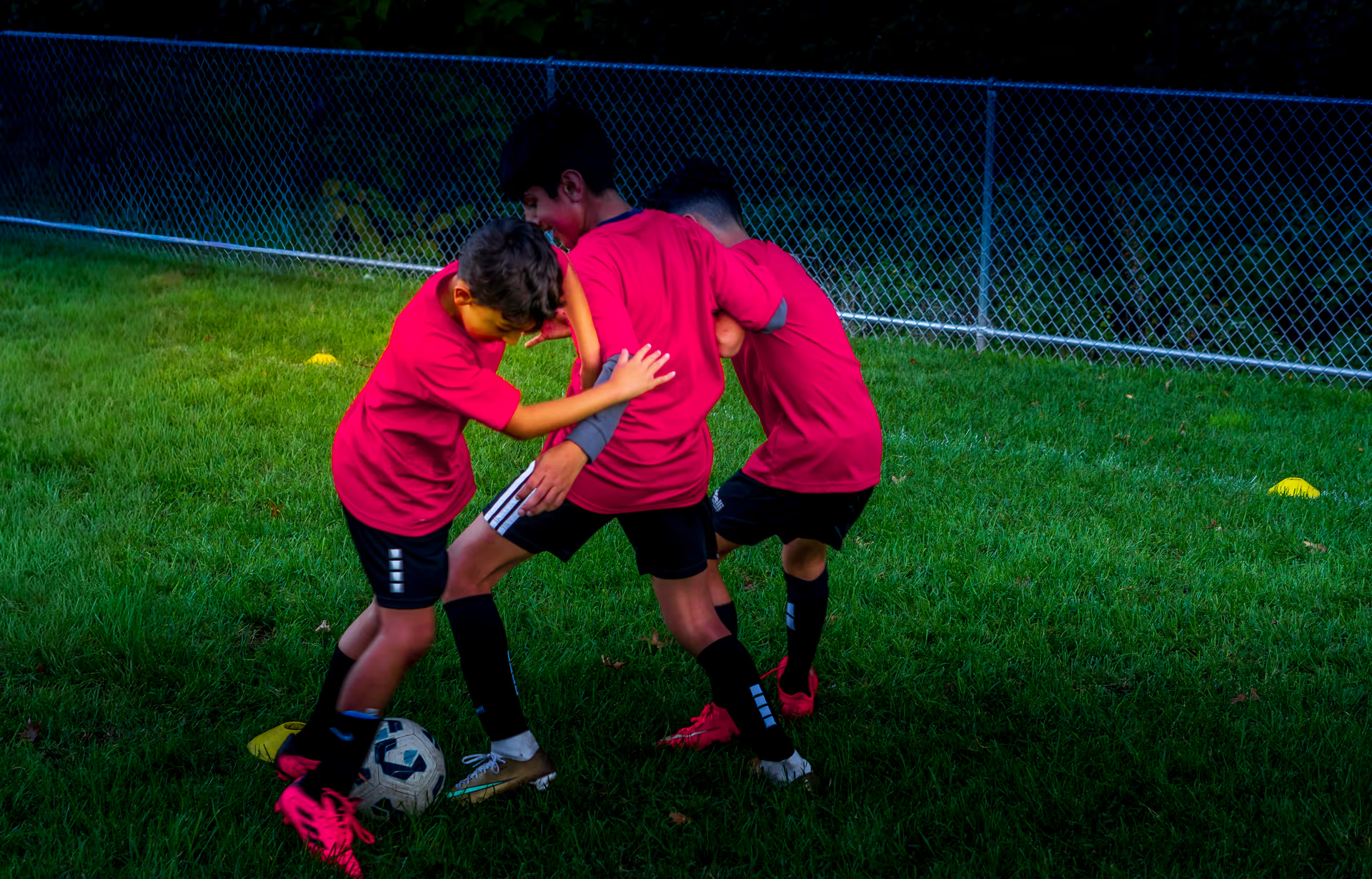
Instead of the usual 11v11 setup, think 3v3, 4v4, or 5v5. Fewer players means every single kid is far more involved: more touches, more ways to attack, more chances to defend, more decisions to make. Players are not standing around waiting for the ball; they are constantly problem-solving, responding to pressure, and making quick calls.
This is game-like learning in its purest form. Kids build technical skill and soccer IQ at the same time, simply because they are actually playing instead of watching.
3. Individual coaching speeds up progress
No two kids develop the same way. One might need a confidence boost. Another might be struggling specifically with passing or positioning. When a coach really knows a player's strengths and weaknesses, feedback is specific and useful, not general advice. Learn more about Gioca’s coaching approach and the experience behind its player-first training philosophy.
Personalized coaching helps kids fix mistakes before they become habits, lock in what they already do well, build real confidence, set goals that make sense for them, and learn at a pace that fits their development.
4. Training that feels like the real game
Kids tend to play games the same way they practice. If all their training is isolated drills with zero pressure, those skills struggle to show up in a real match. Good training regularly includes match-level pressure, real decision-making, positioning, communication, transitions, and limited space and time.
Coach Zane puts it this way: "You can master a drill, but soccer is about making the right decision in the moment. That's why we replicate game situations in practice. Players learn to read the game, to communicate, and to be calm under pressure. Skills that translate directly into matches."
5. The mental game matters just as much
Soccer is not purely physical. The mental side is often what separates two similarly skilled players. Kids who stay focused, bounce back from mistakes, communicate well, and make confident decisions under pressure develop faster than equally talented kids who get in their own heads. We cover it in depth in mental performance coaching in youth soccer.
6. Consistency beats intensity
Most kids do well with two to four structured sessions a week plus casual practice at home. Consistent, quality training beats daily practice without a plan. Rest and recovery are part of the development process, not separate from it.
Common mistakes that slow kids down
- Practicing without any real purpose
- Only working on skills they are already good at
- Ignoring the weaker foot
- Never practicing under real pressure
- Only focusing on games and skipping training work
- Comparing their progress to teammates
- Expecting results overnight
How do you know training is actually working?
Look for a cleaner first touch, smarter decisions, more confidence with the ball, better communication, quicker bounce-back after mistakes, improved positioning, and a stronger read of the game. Even on a weekend where your kid does not score, these usually mean they are becoming a genuinely stronger player.
Related reading: 5 signs your child is improving at soccer, even if they didn't score.
Why the right environment matters
The best environments share small-group coaching, real individual attention, a positive culture, age-appropriate coaching, match-realistic training, strong technical development, soccer IQ built into sessions, and consistent honest feedback.
At Gioca, this is at the heart of our player development philosophy: small-group coaching, individualized feedback, game-realistic exercises, and a development-first mindset. See how it comes together in our training programs.
Your questions, answered
What training methods improve soccer skills fastest?
The most effective methods combine purposeful technical practice, small-sided games, individualized coaching, game-realistic training, mental performance work, and consistent practice.
Are small-sided games effective for young soccer players?
Yes. Small-sided games give players more touches on the ball and more opportunities to make decisions, find space, communicate, and react to changing game situations.
Does individual coaching help young soccer players improve?
Yes. Individualized coaching helps identify a player's specific strengths and areas for improvement, allowing training and feedback to be more relevant to their development.
How often should young soccer players train?
The right frequency depends on the player's age, experience, goals, and overall schedule. Consistent, age-appropriate training combined with adequate recovery is more important than simply maximizing training hours.
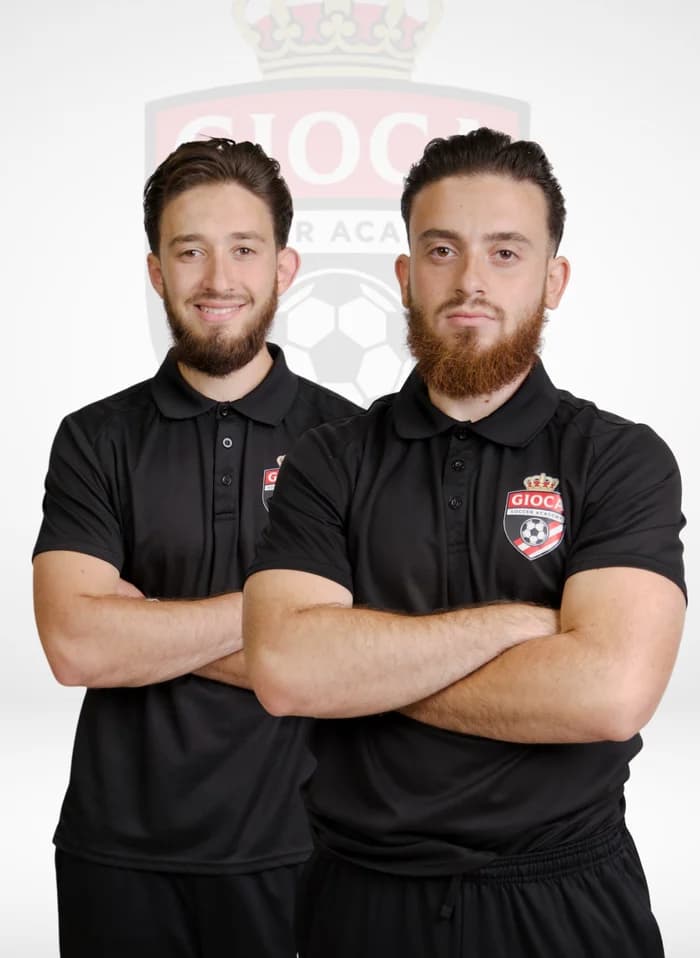
From the Gioca coaching team
Zane and Julian Taha
Meet the people behind the perspective. Our coaches bring a personal approach to every conversation and every session.
Book a Free Session