Mental Performance
Mental Performance Coaching in Youth Soccer: Building Confidence, Resilience, and Mental Toughness
One bad touch stays in their mind longer than three good passes. Why talented young players struggle, and how confidence, resilience, and mental toughness can be trained like any skill.
In this article
In this article
You've seen it so many times that after a hard game your child walks away with their shoulders drooped, barely looking you in the eye. One bad touch seems to stay in their mind longer than three good passes. The pre-game stomachache that shows up like clockwork.
If any of this sounds familiar, you're not alone and your child isn't broken. It's not typically a skills issue. It's often a mindset challenge. And just like passing or shooting, it can be trained. This is where mental performance coaching comes into the picture.
At Gioca Soccer Academy, player development goes beyond technical skills to help young players grow on and off the field.
Why Some Young Players Struggle Despite Having Talent
Having talent doesn't make you a long-term success at soccer. Many talented young players struggle because they're battling challenges such as self-doubt, fear of failure, or pressure to perform.
A player with excellent technical ability can still freeze in a game because they're afraid of making a mistake in front of teammates, coaches, or parents. This is why mental abilities shouldn't be overlooked alongside technical skills.
The Missing Piece in Youth Soccer Development
Mental performance coaching helps players build confidence, focus, resilience, emotional control, and better decision-making under pressure.
Mental performance coaching is not therapy, and the need for it does not necessarily imply something is “wrong” with your child. Think of it the same way you would think about strength and conditioning training. They're simply practicing a portion of their performance that requires intentional practice.
Why confidence changes everything
A confident child is more likely to attempt a new skill in a game. They are not so afraid of looking bad, so they try new moves with more enthusiasm. And when they make mistakes, that confidence lets them keep going without giving up mentally.
The hidden challenges many young players face
- Fear of failure: worrying about making mistakes in front of teammates, coaches, or parents
- Fear of being judged: becoming overly concerned about what others think
- Perfectionism: setting unrealistic standards and viewing anything less as failure
- Negative self-talk: thoughts like "I'm not good enough" or "I always mess up"
- Fear of disappointing others: more worried about letting down parents or coaches than focusing on the game
- Game-day nerves: stomach aches, irritability, or hesitation on the field
What mental toughness really means
Real mental toughness is about maintaining focus when the game gets difficult, recovering quickly from a mistake, reacting to setbacks, playing hard when things aren't going your way, and taking the time to learn what the coach is saying.
A mentally tough player can make a mistake, refocus, and be ready for the next play instead of dwelling on it. We break down the in-game side of this in how to stay calm under pressure during a soccer game.
What Mental Performance Coaching Looks Like in Practice
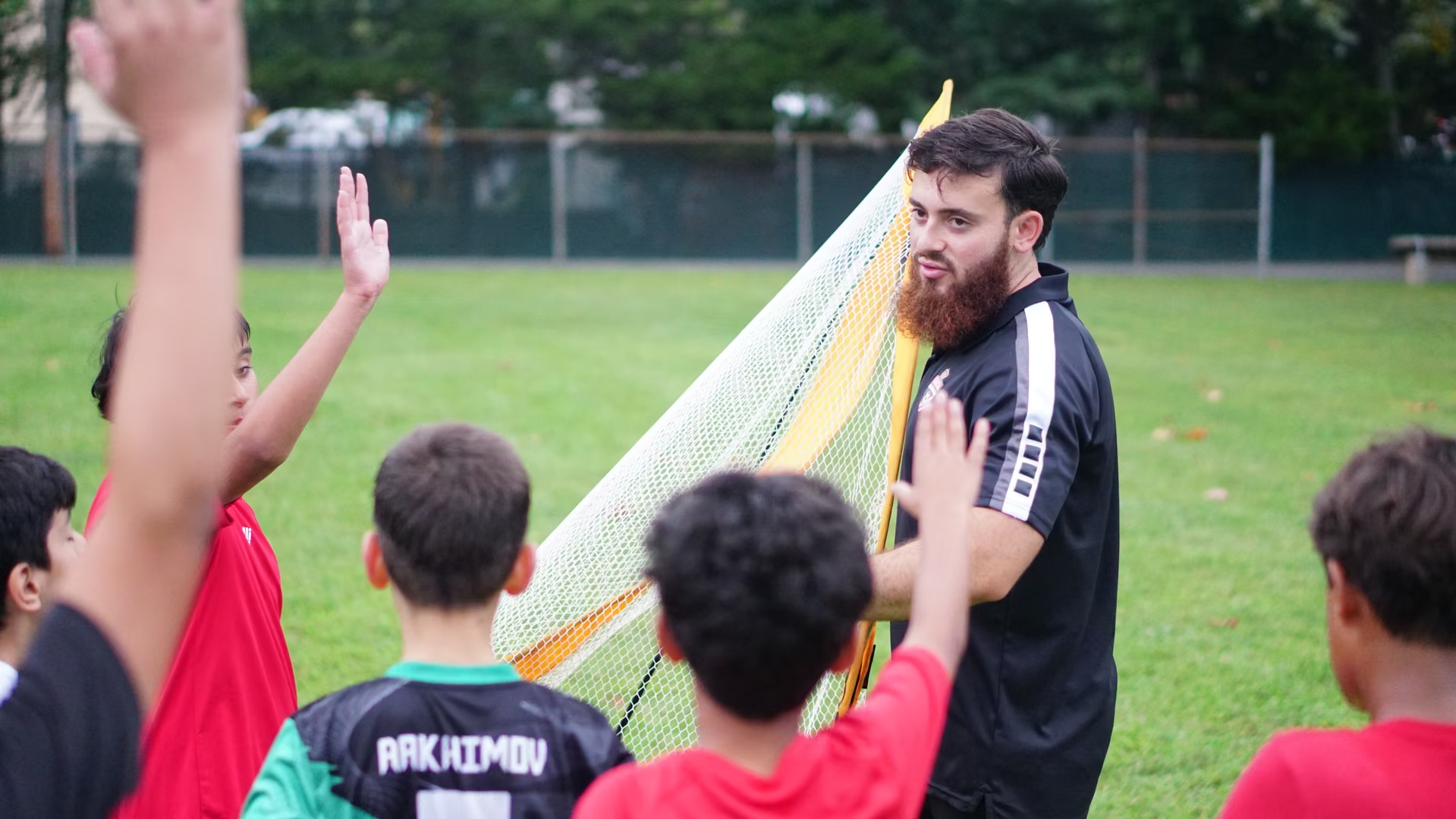
Good mental performance coaching happens right there on the field, woven into everyday training.
- Learning through mistakes: Coaches use mistakes as teaching moments.
- Building decision-making skills: Players make quick choices under pressure.
- Developing a growth mindset: Players see ability as something that develops with effort.
- Encouraging communication: Players learn to speak up, ask questions, and talk to teammates.
- Creating positive challenges: Coaches design drills that stretch players without overwhelming them.
Signs your child is building resilience
Watch for greater confidence and willingness to try new skills, a healthier response to mistakes with quicker recovery, improved focus during games and training, increased independence in solving problems, and stronger communication with teammates and coaches. Many of these are the same signs your child is improving at soccer even when they are not scoring.
Helping Your Child Develop Confidence at Home
Some of the most powerful reinforcement happens in the car ride home, not on the field.
- Focus on effort before results.
- Normalize mistakes.
- Celebrate progress.
- Avoid sideline coaching.
- Model resilience.
Instead of asking, “Did you win?” or “How many goals did you score?” try: What did you learn today? What challenged you? What are you proud of?
The Gioca Approach
At Gioca, mindset development isn't something that happens after player development. It's part of player development. We incorporate confidence building into our sessions, encourage players to see challenges as opportunities to learn, and place emphasis on decision-making in realistic, game-like scenarios. See how it fits into our training programs.
Your questions, answered
What is mental performance coaching in youth soccer?
It's a form of coaching focused on building mental skills like confidence, focus, resilience, and emotional control alongside technical training.
Why is mental toughness important for young soccer players?
Mental toughness helps players stay focused, recover quickly from mistakes, and keep competing when things get difficult.
Can mental performance coaching help build confidence?
Yes. Confidence is one of the primary skills that mental performance coaching helps develop, helping players feel more comfortable trying new skills, taking risks, and bouncing back after mistakes.
How can parents help build mental resilience?
Parents can help by praising effort over outcomes, normalizing mistakes, avoiding sideline coaching, modeling resilience, and asking growth-focused questions after games.
How can a 13-year-old club soccer player access mental performance coaching?
Mental performance coaching is available to youth players through dedicated coaches, academy programs, and coaches trained in mental skills. At Gioca, these skills are integrated into our training programs as part of regular player development. For a 13-year-old, this can be a natural way to build stronger mental skills while continuing to develop as a player.
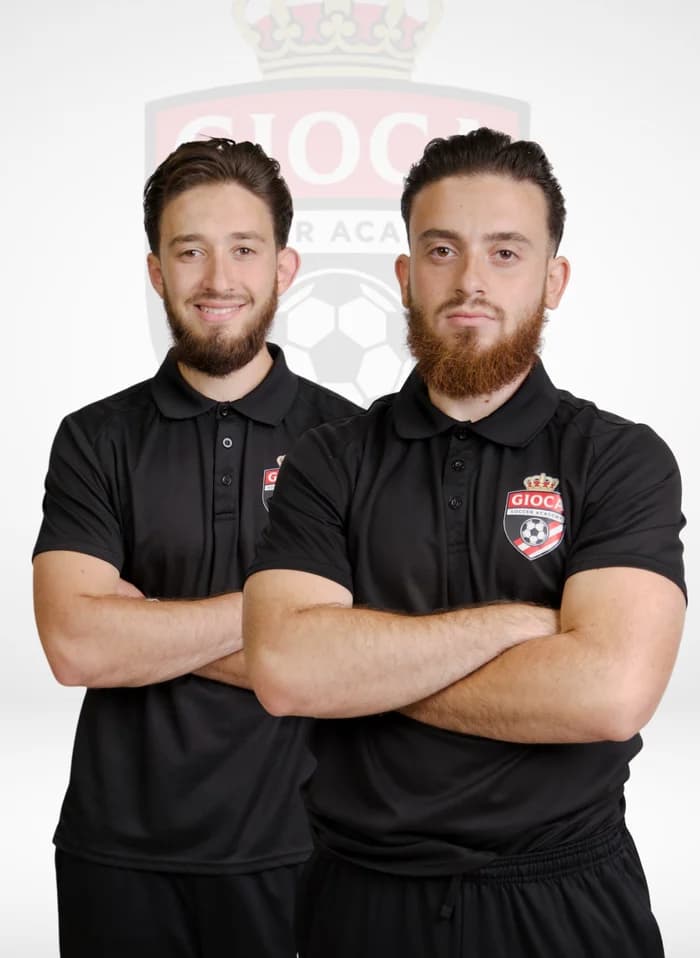
From the Gioca coaching team
Zane and Julian Taha
Meet the people behind the perspective. Our coaches bring a personal approach to every conversation and every session.
Book a Free Session