For Parents
5 signs your child is improving at soccer, even if they didn't score
Goals are just a small part of the picture. Smarter decisions, better movement, faster recovery after mistakes, and more talking on the field all signal real development.
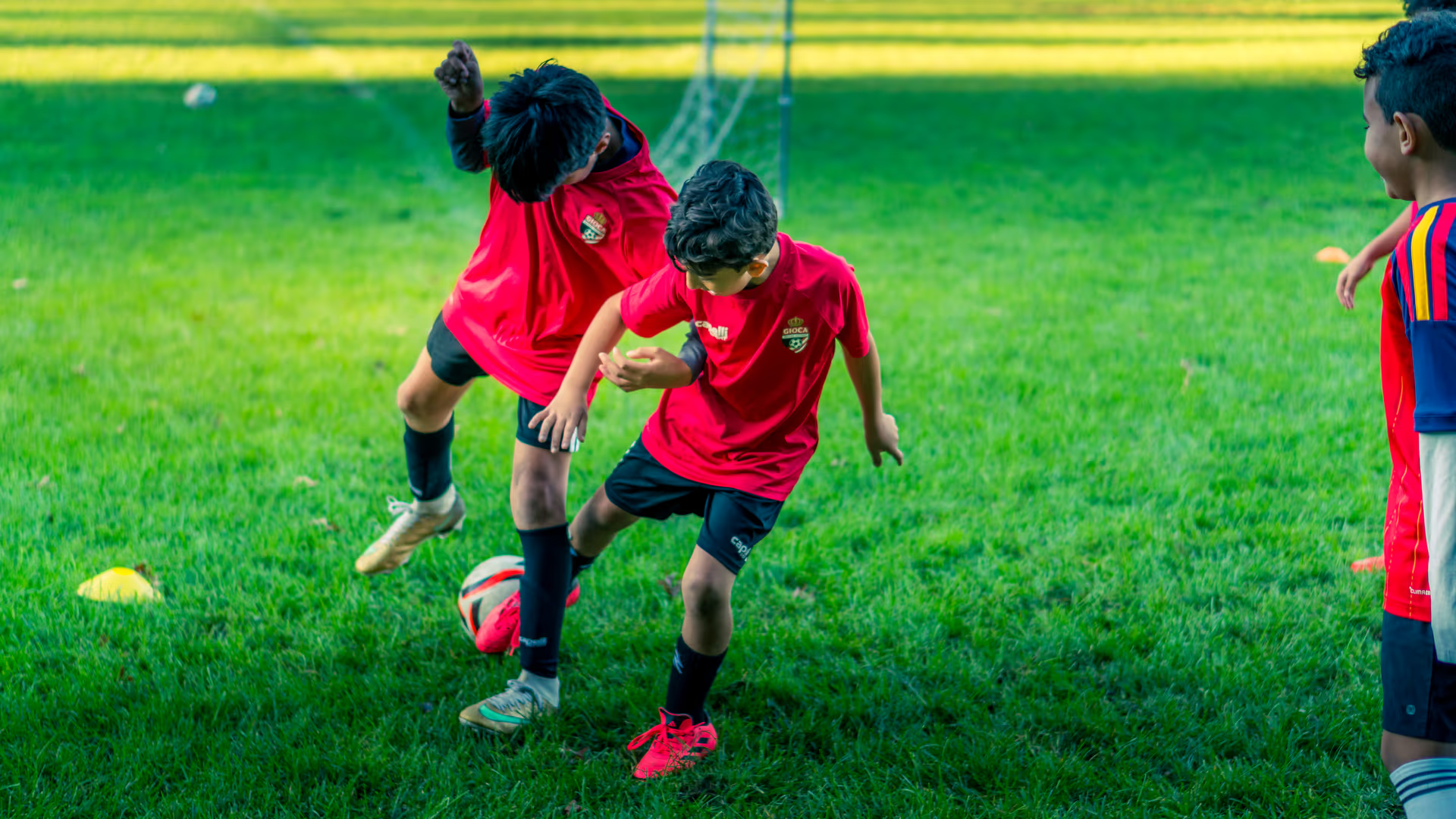
In this article
In this article
The final whistle blows, and there it is: "Did you score any goals?"
It is the question almost every parent asks on the walk back to the car. And look, goals are fun. There is nothing like watching your kid celebrate after finding the back of the net. But goals are just a small part of the picture.
A kid can have an outstanding game without their name ever showing up on the scoresheet. Maybe they made a perfectly smart pass. Maybe they pulled a defender out of position just by making a clever run. Maybe they lost the ball, got frustrated for two seconds, and then hustled back to win it right back. Coaches see these moments and know exactly what they mean: they are watching a player's brain develop, not just their feet.
Real progress in youth soccer usually shows up in the small stuff, long before it translates into goals or assists. Here are five things worth paying attention to.
Why goals don't tell the whole story
A center-back's job is not to score; it is to make sure nobody else does. A midfielder might go an entire game without taking a shot and still be the reason their team controlled play from start to finish. Even forwards contribute plenty by pressing defenders and dragging them out of position, opening space for teammates.
Goals also depend on a lot of things a player cannot control: minutes on the field, who they are playing with, who they are playing against, how the game unfolded. A scoreless game does not mean your kid did not play well. If you want to track development, zoom out and look at the habits building over weeks and months.
1. They're making smarter decisions on the ball
Young players go through a phase where every touch turns into a dribbling attempt. As their game sense sharpens, you will notice something different: they pass before pressure arrives, shield the ball when there is no safe option, or recognize when it actually makes sense to take a defender on.
Sometimes a simple, boring pass that keeps possession alive is worth far more than a flashy attempt to dribble through three players. A good question after the game: "What's one decision today that you felt really good about?"
2. They're moving well without the ball
Players spend the vast majority of a match without the ball at their feet, so what they do during that time matters just as much. Is your child sliding into passing lanes to give a teammate an option? Making a run to drag a defender out of position? Dropping back to support when the team needs it? Staying connected defensively instead of chasing the ball?
Good positioning tells you a player understands their role. Even if they never touch the ball on that run, they might have just opened the space for someone else to score.
3. They bounce back fast after a mistake
Every young player makes mistakes. What tells you something about their progress is what happens in the ten seconds after. A player building real confidence might feel down for a second, then gets right back into it: chasing back after a turnover, staying hungry after a miss, still wanting the ball on the next play instead of hiding from it.
That ability to reset quickly is a mental skill, and it is a big one. Instead of pointing out what went wrong, try: "What would you try differently next time?"
4. They're talking more on the field
Communication grows naturally as kids get more comfortable and confident. Calling for the ball, warning a teammate that pressure is coming, pointing toward open space, organizing the defense, or picking a teammate up after a mistake. Words like "turn," "man on," or "drop" seem small, but they show a kid who is reading the game and looking out for the people around them.
It is not about being the loudest kid on the field. A quieter player who says the right thing at the right moment is doing just as much good.
5. They understand the game on a deeper level
This might be the most telling sign of all. A developing player starts recognizing patterns before they happen: checking over their shoulder before the ball arrives, anticipating where the play is heading, spotting space other kids do not notice, adjusting position the moment possession changes.
Coaches usually spot this growth before parents do, because they know exactly what each player is supposed to be doing. If you want to build this deliberately, see our guide to developing soccer IQ.
How parents can support the long game
Celebrate effort, courage, and teamwork just as loudly as goals and wins. During the game, let the coach do the coaching. Afterward, give them breathing room before any breakdown of the match, then ask: What did you enjoy most today? What do you think you did well? What is something you want to work on next time?
And be patient. Development in youth soccer is messy and never a straight line. If your child wants something concrete to aim for, help them set meaningful goals for the soccer season that stay within their control.
How Gioca helps kids grow beyond the scoreboard
At Gioca, we are not chasing short-term results; we are building complete players. Our small-group coaching model means more touches, more individual feedback, and more real game situations. Every session blends technical fundamentals with soccer IQ, decision-making, movement, confidence, and communication. See how that works inside our training programs, and read what coaches notice that parents may miss for the coach's-eye view.
Your questions, answered
What is the ideal age to start competitive soccer?
Most children start between 8 and 12, but readiness varies by player.
How can I tell if my child is ready?
Look for desire, coachability, teamwork, emotional maturity, and willingness to practice.
Is competitive soccer stressful?
It can be challenging, but the right club can create a positive environment focused on growth.
What should parents expect?
More practices, games, tournaments, travel, and commitment than recreational soccer.
How do I find the right soccer club in New Jersey?
Look for experienced coaches, a player-first culture, and a focus on long-term development.

From the Gioca coaching team
Zane and Julian Taha
Meet the people behind the perspective. Our coaches bring a personal approach to every conversation and every session.
Book a Free Session