For Parents
Should Kids Play Soccer Year-Round? A Parent's Guide
Do kids need to play soccer all year? A parent's guide to off-seasons, other sports, days off and planning a balanced year with your child's coach.
In this article
In this article
Quick Answer
Kids do not need to play organized soccer year-round to keep developing. A balanced year can include academy training, recreational play, other sports and planned breaks. The goal is to support development without making soccer the only thing in a child's life.
What Does an Off-Season Mean for a Young Soccer Player?
An off-season is a planned period when a player steps away from organized soccer training and competition. It does not mean a child has to stop being active. They might try another sport, go swimming, ride a bike, play outside or simply enjoy more free time.
The American Academy of Pediatrics (AAP), in its 2016 clinical report Sports Specialization and Intensive Training in Young Athletes, discusses the potential risks of early sports specialization and intensive training. The report recommends at least three months away from a particular sport throughout the year, in one-month increments, and at least one to two days off per week from that sport.
These are general recommendations, not a fixed calendar for every child, and this article is general information, not medical advice for any one child. Parents can consider their child's interests, schedule and health when planning breaks, and can talk to a pediatrician about any concern.
Academy Training, Recreational Play or Other Sports?
Different activities offer different experiences. This simple comparison shows where each can fit.
| Activity | Purpose | Intensity | How often | Who it suits |
|---|---|---|---|---|
| Academy training | Develop soccer skills and game understanding | Structured and coach-led | According to development needs | Children who enjoy organized training |
| Recreational soccer | Enjoy the game and play with others | Flexible | When time and interest allow | Children who prefer informal play |
| Other sports | Explore different skills and activities | Depends on the sport | Based on interest | Children who enjoy variety |
| Unstructured play | Enjoy movement without competition | Child-led | Whenever practical | Children who enjoy outdoor activities |
A child might attend academy training during the soccer season, try another sport during a break and still enjoy casual games with friends. Parents weighing structured play against casual play can read how recreational and competitive soccer compare.
More sessions do not automatically mean better development. Purposeful practice matters more than a full calendar, and our guide to purposeful training versus adding sessions explains the difference.
Signs Your Child's Schedule May Need Adjusting
A busy schedule can sometimes become overwhelming. Parents can look for changes in their child's attitude, energy and interest in playing.
- Losing interest: A child who once enjoyed training may start showing reluctance or frustration.
- Regular tiredness: They may struggle to feel ready for the next activity.
- Repeated discomfort: Ongoing aches or pain should not be dismissed as part of playing soccer. A pediatrician can advise, and our guide on resting and listening to the body covers what recovery can look like.
- Limited family time: Schoolwork, friendships and family activities may get pushed aside.
- No meaningful break: A calendar filled with organized soccer throughout the year may leave little room for recovery.
These signs can be a reason to take another look at the schedule. If soccer is starting to affect school, rest or family time, read about balancing school, family and a soccer season for practical guidance.
How to Talk About the Schedule With a Coach
Parents and coaches can work together to understand what a child needs throughout the year. Rather than focusing only on the number of practices, discuss the purpose of training and the overall schedule.
Consider asking:
- What should my child focus on developing right now?
- How does the schedule account for breaks from soccer?
- How can we coordinate soccer with another sport?
- What should we do if our child seems tired or loses interest?
- When should we review the schedule again?
Every player has different interests, commitments and development needs. Parents should feel comfortable discussing these with their coach instead of assuming that a busier training calendar always means better progress.
At Gioca, Coach Zane and Coach Julian focus on individualized feedback and a player-centered approach. Helping children develop also means teaching them to recognize situations and make decisions on the field, which is the idea behind game awareness and soccer IQ.
Annual Planning Checklist for Parents
Before the next season begins, look at the entire year rather than planning only around upcoming matches.
- Review soccer seasons, tournaments, school commitments and other activities.
- Plan at least three months away from a particular sport throughout the year, in one-month increments, in line with the AAP report.
- Include at least one to two days off per week from that sport.
- Consider other sports and recreational activities your child enjoys.
- Review the combined demands of all training sessions and games.
- Ask your child how they feel about the schedule.
- Discuss training priorities and recovery with the coach.
- Revisit the plan as school and family commitments change.
The aim is not to create a perfect calendar. It is to make sure children have opportunities to enjoy soccer while having time for other parts of their lives.
Give Your Child Room to Grow With Gioca
Soccer development is about more than practices and matches. Children also need room to enjoy the game, build confidence, explore other interests and recover. Gioca Soccer Academy in South River, NJ, trains players in small groups with individualized feedback from Coach Zane and Coach Julian. To talk about your child's year, book a free trial session.
Source: American Academy of Pediatrics, Council on Sports Medicine and Fitness, "Sports Specialization and Intensive Training in Young Athletes," Pediatrics, 2016;138(3):e20162148. https://doi.org/10.1542/peds.2016-2148
Your questions, answered
Should kids play soccer year-round?
Not necessarily. Children can develop their soccer skills without participating in organized soccer throughout the year. Other activities and planned breaks can also be part of their development.
How long should a young soccer player take off?
The AAP report recommends at least three months away from a particular sport throughout the year, in one-month increments, along with one to two days off per week from that sport. These are general recommendations, and a pediatrician can advise on an individual child.
Can my child play another sport during the soccer off-season?
Yes. Children can explore other sports and recreational activities while taking a break from organized soccer. Their interests and overall schedule can help guide the choice.
Does an off-season break affect soccer development?
Taking a break does not automatically mean losing progress. Time away from organized soccer can provide opportunities for physical and psychological recovery.
Should parents or coaches decide the training schedule?
Both perspectives matter. Coaches understand training priorities, while parents know the child's interests, school commitments and activities outside soccer. Discussing these together can help create a balanced schedule.
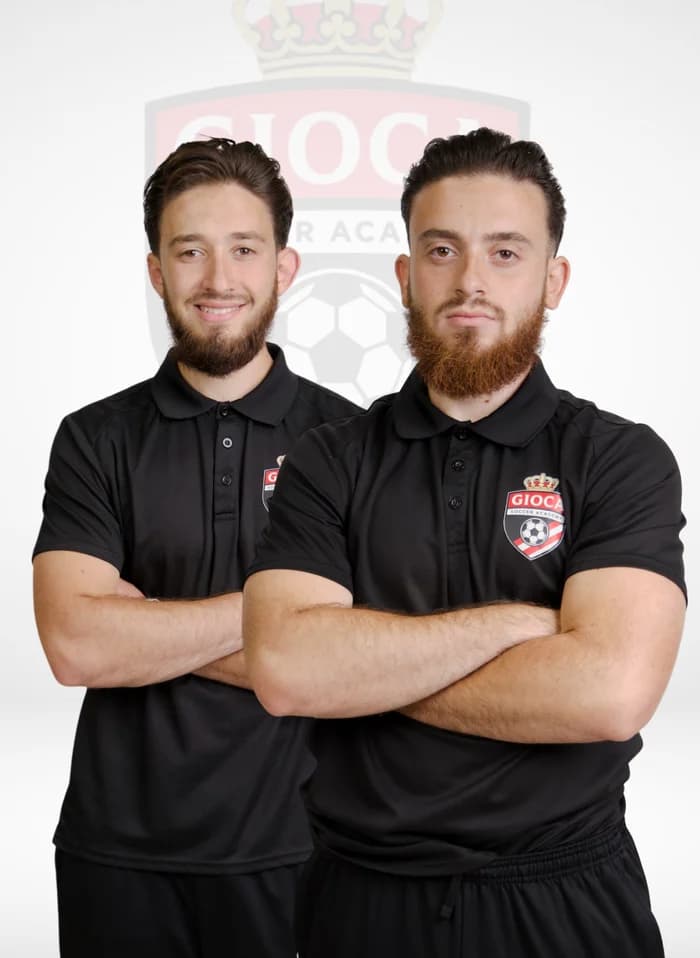
From the Gioca coaching team
Zane and Julian Taha
Meet the people behind the perspective. Our coaches bring a personal approach to every conversation and every session.
Book a Free Session