Our Approach
Small Group Soccer Training vs Large Academy Programs: Which Is Better for Your Child?
Some programs put 10 players in a training group. Others run 30 or more in the same session. Which environment actually helps your child develop? It depends on the player.
In this article
In this article
Your child is ready to start soccer training. But with so many programs available, a new question quickly arises: which environment will help them develop best, a large academy program or a small group training program?
Some programs place 10 to 15 players in a training group. Others may have 30 to 40 players or more in the same session.
The best atmosphere is not automatically the largest or the smallest group. It is the one that offers the right mix of coaching, challenge, support, and opportunity for your child to develop.
What is small group soccer training?
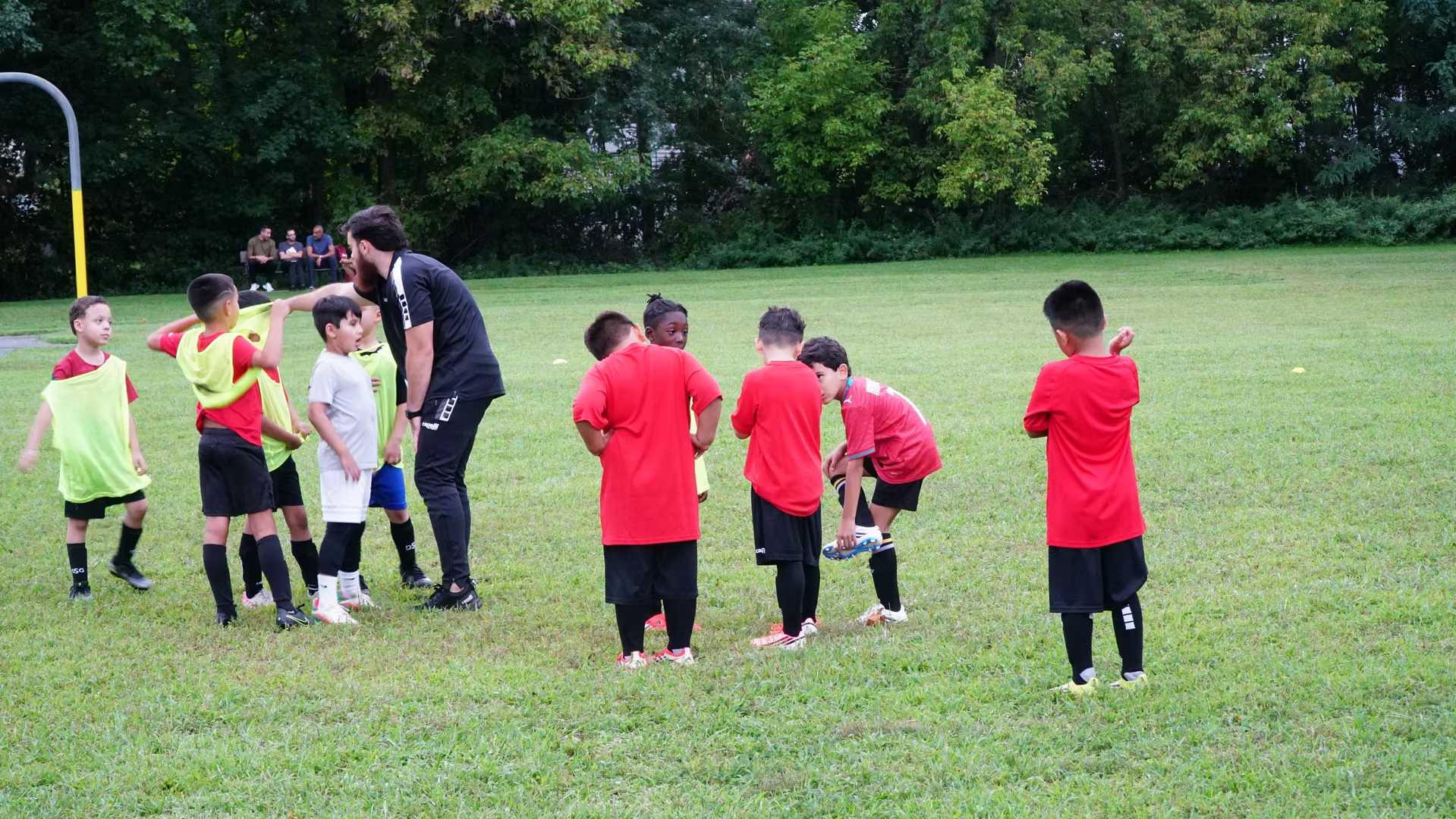
In small group training, the ratio of players to coaches is lower, which provides more individual attention, more coaching feedback, and more active participation. In practice that means:
- More coaching interaction
- More time on the ball
- More individualized feedback
- Greater accountability
- Increased player engagement
What is a large academy program?
Larger academy programs generally train bigger groups of players and often field multiple teams with a wider range of competitive opportunities. They can provide multiple team levels, structured development pathways, larger player pools, tournament opportunities, and exposure to challenging competition.
The biggest difference
The biggest difference is the personal coaching attention a player gets. At Gioca, coaches get to know players in smaller groups and can observe, give feedback, and build real connections. Players receive corrections and guidance more often during sessions.
In larger programs, coaches spread their focus across more athletes. Quality coaching can still exist, but the amount of personalized interaction is usually reduced. This difference affects coach-player relationships, frequency of feedback, confidence development, technical improvement, and overall learning.
How small group training supports development
- More touches on the ball: players wait less and play more
- More individual feedback: coaches help players adjust during the session, not after it
- Stronger coach-player relationships: coaches understand each player's strengths, weaknesses, and learning style
- Greater accountability: every player is expected to be involved and contribute
- Increased confidence: encouragement, support, and real opportunities for success
When large academy programs can be a great fit
If you are looking for more playing opportunities and advanced competition, large academy programs are a legitimate choice. For highly motivated players who are ready for a more competitive setting, that environment can be valuable. Our guide to recreational vs competitive soccer covers how to judge readiness for a bigger stage.
Signs your child may benefit from small group training
- They need to build more confidence on the field
- They are not getting adequate feedback in their current program
- They tend to get lost in larger groups
- They are still building technical fundamentals
- They learn best through interaction
- They benefit from stronger coach relationships
Questions to ask before choosing a program
How many players train in each group? How often does my child receive individual feedback? How are players grouped? What does a typical session look like? How is progress measured? Can we attend a trial session before joining?
Not sure which is right for your child?
During a free trial session at Gioca, coaches observe your child's current level, learning style, confidence, and development needs before recommending the right environment. Here is what to expect at a trial session, and a look at our training programs.
Your questions, answered
Is small group soccer training better than a large academy?
It depends on your child’s goals. Small groups offer more individual attention, while larger academies may provide more competition.
What are the benefits of small group soccer training?
More ball touches, personalized feedback, coach interaction, and player engagement.
What is a good player-to-coach ratio?
A lower ratio generally allows coaches to give players more individual attention and feedback.
How do I choose the right soccer program?
Consider group size, coaching quality, feedback, training structure, competition level, and your child’s needs.
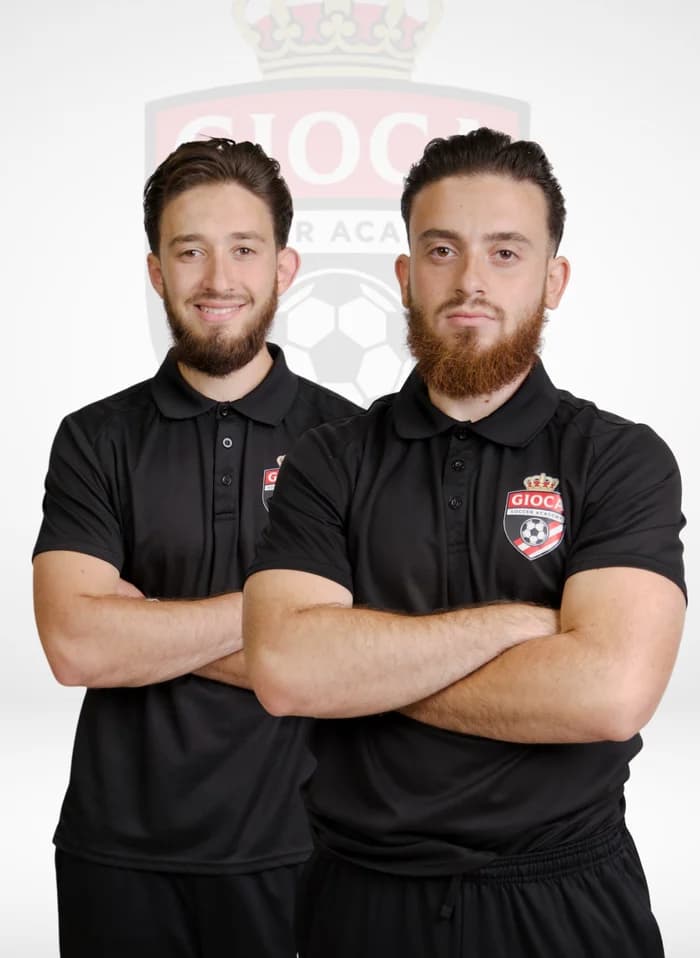
From the Gioca coaching team
Zane and Julian Taha
Meet the people behind the perspective. Our coaches bring a personal approach to every conversation and every session.
Book a Free Session